Gummy Playground Building and Hidden Stunts
Design courses that launch gummies farther — and log every stunt in your book.
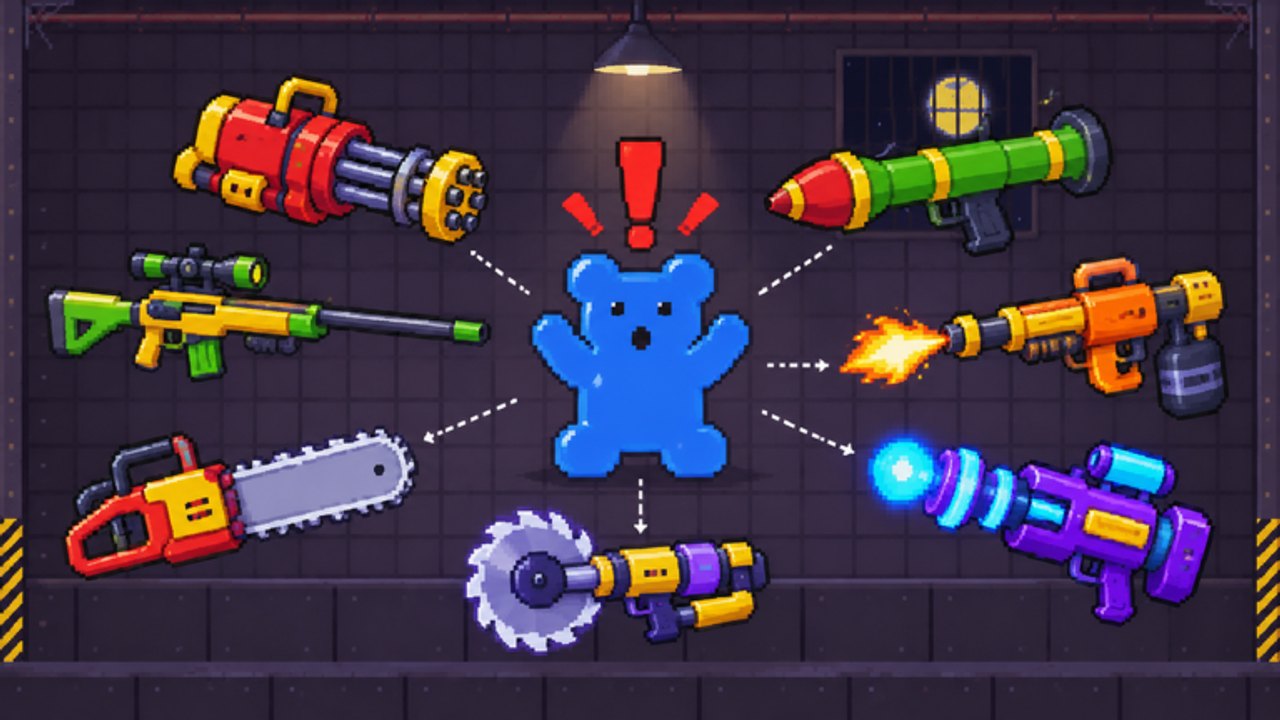
Gummy Playground is not only a fling fighter. The official pitch calls out ramps, traps, and trampolines made from metal, wood, and rope, plus hidden stunts that fill your collection book. This guide teaches a clean building grammar so your courses survive contact with soft bodies and curious friends.
Pair this with Tools and Powers and the tier list so every pad has a purpose.
Why building matters
Soft jelly without geometry turns into random bouncing. Geometry without jelly is a dull obstacle course. The magic is the handshake:
- Builds aim the chaos
- Tools supply the force
- Stunts are reproducible sequences you can teach in a six-player room
Average sessions run near fourteen minutes, so design short loops you can demonstrate twice before the lobby migrates.
Piece roles
| Piece | Role | Common mistake |
|---|---|---|
| Ramp | Convert run speed into air | Too steep — gummies pancake |
| Trampoline | Vertical engine / reset | Stacking overlapping pads |
| Wood panel | Soft wall / lane guide | Sealing the entire arena |
| Metal panel | Harder redirect | Blocking tsunami escapes |
| Rope | Swing, tripwire, hanging bait | Rope spaghetti nobody can read |
Delete early, rebuild often. Cluttered floors hide trampoline centers and ruin freeze aim.
Starter course: the Five-Piece Loop
- Place a low ramp facing open space.
- Put a trampoline two gummy-lengths past the ramp lip.
- Add a side wood panel so blasts do not eject players into the void edge.
- Hang a rope marker above the trampoline as a visual apex target.
- Leave a clear runway behind the ramp so friends can queue.
Run the loop without tools until three players in a row stick the landing. Only then allow blasters. This isolates whether failures are build math or tool timing.
Intermediate: freeze gate
- Keep the Five-Piece Loop.
- Assign one player as the freezer beside the trampoline.
- Launching player hits the pad; freezer locks them at rope height.
- Third player blasts the statue toward a landing ramp.
You just authored a cooperative stunt. Log it in the book if the game recognizes the sequence, or note the steps in chat for manual completion goals.
Traps without rage quits
Friendly traps:
- Rope trip lines before a ramp (comedy falls)
- Hidden trampoline behind a wood blind
- Melt / sticky zones (when available) in optional side lanes
Unfriendly traps:
- Black hole under someone’s unfinished editor ghost
- Full metal boxes with no exit during tsunami spam
- Deleting a course while a friend is mid-air
Agree on chaos level using tips from the players hub.
Hunting hidden stunts
The description promises hidden stunts and a book to fill. Practical search method:
- Try every new tool once on flat ground (Getting Started habit).
- Retry the same tool on a ramp.
- Retry with freeze involved.
- Retry with two players interacting.
- Watch for UI pings, badge pops, or book checkmarks.
Creators will eventually publish route videos; until then, systematic permutation beats random button mashing. Do not invent video IDs — when a verified stunt tutorial appears, we embed it mid-article here.
Physics tuning tips
- Spacing: If gummies clip through pads, widen gaps slightly; soft bodies need forgiveness.
- Angle: Start ramps shallow; steep angles look cool and fail more.
- Reset pads: Always offer a trampoline “mercy pad” near complex traps.
- Lighting / graphics: On mobile, lower quality if ropes jitter — jitter breaks timing reads.
- Cleanup: End sessions by clearing unused props so the next public lobby is not a junkyard.
Solo vs group design
Solo: Focus on self-launch lines you can complete with freeze + blaster only.
Duo: Add freeze gate roles.
Full six: Build lanes, not fortresses — parallel runways reduce shoving.
Private servers are ideal laboratories. Public servers are showcases. Know which hat you are wearing.
Progression checklist
- Clear the Five-Piece Loop without tools
- Clear it with blaster assists
- Land a freeze-gate cooperative launch
- Build a trap lane that makes friends laugh (not leave)
- Record one reproducible stunt for your book
- Re-test after the next update
When builds break after patches
Soft-body games retune restitution and collision often. If your perfect ramp dies overnight:
- Check updates for physics notes.
- Re-measure spacing with a fresh Five-Piece Loop.
- Adjust trampoline distance before redesigning the whole parkour.
Related reading
- Controls for place / rotate / delete inputs
- Daily Rewards if you need more build pieces from quests
- Codes when promos grant construction crates
- Scripts warning page if someone offers “auto-build” injectors
Build less, test more, and let the jelly do the theatrical work. That is the Gummy Playground fantasy.
Frequently Asked Questions
Quick answers for jelly physics, codes, and tools.
How do I fill the stunt book?
Experiment with tool plus build combinations systematically — flat ground, ramp, freeze, and multiplayer variants — and watch for book checkmarks or badges.
What should I build first?
A shallow ramp, a trampoline, one guide wall, and a clear runway. Master that Five-Piece Loop before complex traps.
Why do my ramps fail?
Usually they are too steep, too close to walls, or stacked on overlapping pads. Delete, widen spacing, and retest without tools.
Can I practice builds alone?
Yes. Solo self-launch lines are ideal. Use private servers when public lobbies keep demolishing your course.